
Fall in Jacksonville finally brings a break from the heat, and for a lot of us that means a long overdue Saturday in the yard. Oak leaves pile up, the hedges need a trim, and the mulch bags come out. Then Sunday morning arrives and you can barely bend over to tie your shoes. Back pain from yard work is one of the most common reasons people call our office this time of year. Here is why it happens and how to get the yard done without paying for it all week.
Why yard work causes so much back pain
Yard work does not feel like exercise, but your body treats it like a long workout. You bend, twist, lift, and reach for hours, often with no warm-up and after a week of sitting at a desk.
Repetition adds up. A single rake stroke is nothing. A thousand of them, all twisting to the same side, put real strain on the muscles and joints of the lower back.
Bending at the waist. Pulling weeds or scooping leaves with straight legs and a rounded back loads the discs and ligaments of the lower spine instead of the strong muscles in your hips and legs.
Heavy, awkward loads. A wet bag of leaves, a 40-pound bag of mulch, or a full wheelbarrow is heavier and more awkward than most things we lift during the week.
Doing it all at once. Most of us save the whole job for one day. Six straight hours is where small strains turn into a sore, locked-up back.
Warm up first, then pace yourself
Take five minutes to loosen up. Walk around the yard while you plan the job, then do a few gentle hip circles, ten slow trunk rotations, and a couple of easy squats. The goal is simply to get blood moving into the muscles you are about to use.
Break big jobs into smaller chunks. Rake the front yard on Saturday and the back on Sunday. Every 30 to 45 minutes, take a short break to stand tall, walk around, and drink some water. October in North Florida can still be warm, and dehydrated muscles cramp and strain more easily.
Mix up your tasks. Rake for a while, switch to trimming, then go back to raking. Changing positions gives overworked muscles a rest.
How to rake without wrecking your back
Raking is the classic culprit, and a few small changes go a long way.
Use your legs. Stand with your feet apart and one foot slightly in front of the other, like a fencer. Shift your weight from the back foot to the front foot as you pull, so your legs do the work instead of your arms and back.
Switch sides. Every few minutes, switch which hand is on top and which foot is in front. This spreads the load evenly instead of hammering one side of your back all afternoon.
Keep the rake close. Long, reaching strokes force you to bend forward. Shorter strokes, closer to your body, keep your spine more upright.
Pick the right tool. A rake with a longer handle means less bending. Ergonomic handles and lightweight leaf scoops help too.
Lifting and hauling the smart way
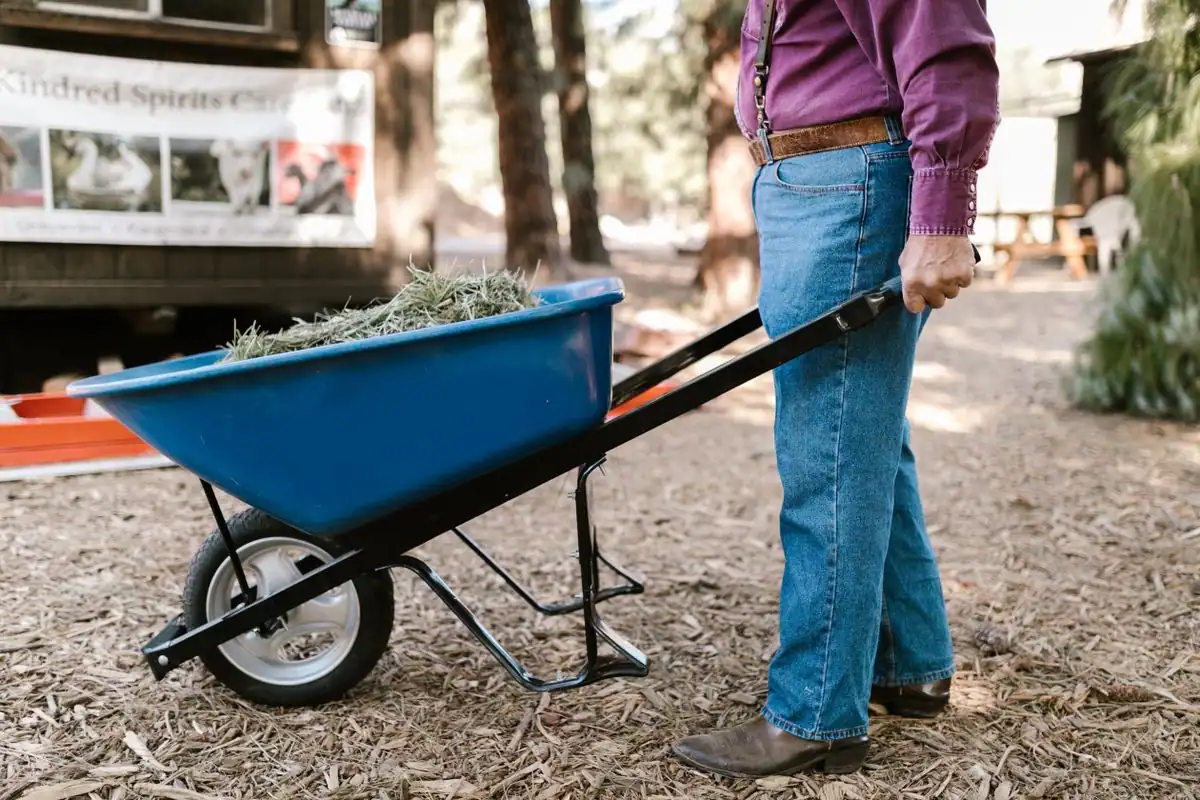
Most yard injuries happen in a single moment, usually when you lift something heavy or twist while holding it. A few habits protect you:
- Bend your knees and hips, not your waist, when you pick something up. Keep your chest up and the load close to your body.
- Do not twist while lifting. Turn your feet to face where you are going, then move.
- Split heavy loads. Fill leaf bags halfway. Two lighter trips beat one heavy one every time.
- Let wheels do the work. Use a wheelbarrow or garden cart, and push it rather than pulling it behind you.
- Ask for help with anything you would hesitate to lift. Large bags of soil and stones are a two-person job.
If you spend your weekdays at a desk, your back is already starting the weekend a little tight. Our post on desk job habits that wreck your spine has simple fixes that make your weekend work easier too.
Already sore? Home care and when to get help
Even with good habits, sometimes your back lets you know you overdid it. For a typical muscle strain:
Keep moving gently. Short walks are better than staying in bed. Rest that lasts too long can make stiffness worse.
Try ice first, then heat. Ice for 15 to 20 minutes can calm a fresh strain in the first day or two. After that, heat often feels better for tight muscles.
Sleep smart. A pillow between your knees if you sleep on your side, or under your knees if you sleep on your back, takes pressure off the lower back. Our guide to the best sleeping position for neck and back pain explains more.
Most mild strains start to ease within a few days. If yours does not, or it keeps coming back every time you pick up a rake, it is worth having it checked. The National Institute of Neurological Disorders and Stroke has a helpful overview of low back pain and when it needs attention.
Know the red flags. Call a doctor right away if your back pain comes with numbness in the groin or legs, weakness in a leg, loss of bladder or bowel control, fever, or pain after a fall from a ladder. These need immediate medical care.
For the more common lingering ache, chiropractic care is a good next step. At your first visit, Dr. Chad Shaw or Dr. Andrea Shaw will find out what is actually strained, then use chiropractic adjustments, soft tissue work, and massage therapy to get you moving comfortably again. If the pain is running down your leg, our guides to lower back pain and sciatica are good next reads.
Enjoy the yard, not the recovery
Back pain from yard work is common, but it is not something you have to accept as part of fall. Warm up, use your legs, split the loads, and spread the work across a few days. If your back is already talking to you, we are here to help. Walk-ins are welcome at our Perimeter Park office off Southside. Call (904) 997-1349 or book a visit, and let’s get you back outside feeling good.
