Holiday travel back pain is something we hear about every November and December, and a few small changes to how you sit, lift, and sleep can make a real difference. For a lot of Jacksonville families, the holidays mean hours on I-95 or I-10, or an early flight out of JAX. Then you arrive at Grandma’s, sleep on a lumpy guest bed, and spend the first day of your visit rubbing your lower back.
Why travel is so hard on your back
Travel stacks up several things your spine doesn’t love, all in the same couple of days.
Long stretches of sitting. Sitting still for hours tightens the hip flexors and lets the muscles that support your lower back switch off. Many people slump as the miles go by, which adds strain to the neck and lower back.
Vibration and fatigue. Hours of road vibration and constant small corrections at the wheel tire out the muscles that hold you upright.
Heavy, awkward bags. Most of us lift more on travel day than in a normal week, often while twisting into a trunk or reaching into an overhead bin.
Unfamiliar beds and pillows. A different mattress, a pillow that’s too high, or a night on the couch can leave you stiff by morning.
Stress and rushing. Hurrying through an airport or a traffic jam tightens your shoulders, and tense muscles are more likely to ache.
Road trips: set up your seat before you leave the driveway
Take two minutes to adjust your seat before a long drive. It pays off around hour three.
- Sit close enough to the wheel that your elbows and knees stay slightly bent. Reaching for the wheel or pedals pulls you out of good posture.
- Bring the seatback nearly upright, just slightly reclined. Leaning way back pushes your head forward.
- Support your lower back. If your seat lacks adjustable lumbar support, a small pillow or rolled towel behind the curve of your lower back works well.
- Take your wallet out of your back pocket. Sitting on it for hours tilts your pelvis and may irritate the hip and sciatic nerve area.
- Adjust your mirrors while sitting tall. If you start slouching and can’t see well, it’s a reminder to sit back up.
Stop every hour or two. Walk around the rest area and do a few gentle stretches: stand tall and lean back slightly with your hands on your hips, march in place, and roll your shoulders. Ten minutes off the road can save you a sore evening.
If you sit at a desk all week, your back starts the trip already a little tight. Our post on desk job habits that wreck your spine has easy fixes that help on the road too.
Flying without holiday travel back pain
Air travel brings its own challenges, from cramped seats to heavy carry-ons.
Lift your carry-on in two steps. Raise it to the top of the seat back first, then push it into the bin. Keep it close to your body and avoid twisting while it’s overhead. If it’s too heavy to lift comfortably, check it.
Choose an aisle seat if you can. It’s easier to stand up and stretch without climbing over anyone.
Move during the flight. On longer flights, get up and walk when it’s safe to do so. In your seat, do ankle circles, point and flex your feet, and gently squeeze your shoulder blades together.
Moving matters for more than stiffness. The National Heart, Lung, and Blood Institute notes that lack of movement while traveling long distances can raise the likelihood of blood clots. If you have a history of clots or other risk factors, talk with your doctor before a long trip.
Use a travel pillow wisely. A neck pillow can help if you sleep sitting up, but it should keep your head centered, not pushed forward. A small lumbar pillow helps on the plane too.
Packing and lifting luggage the smart way
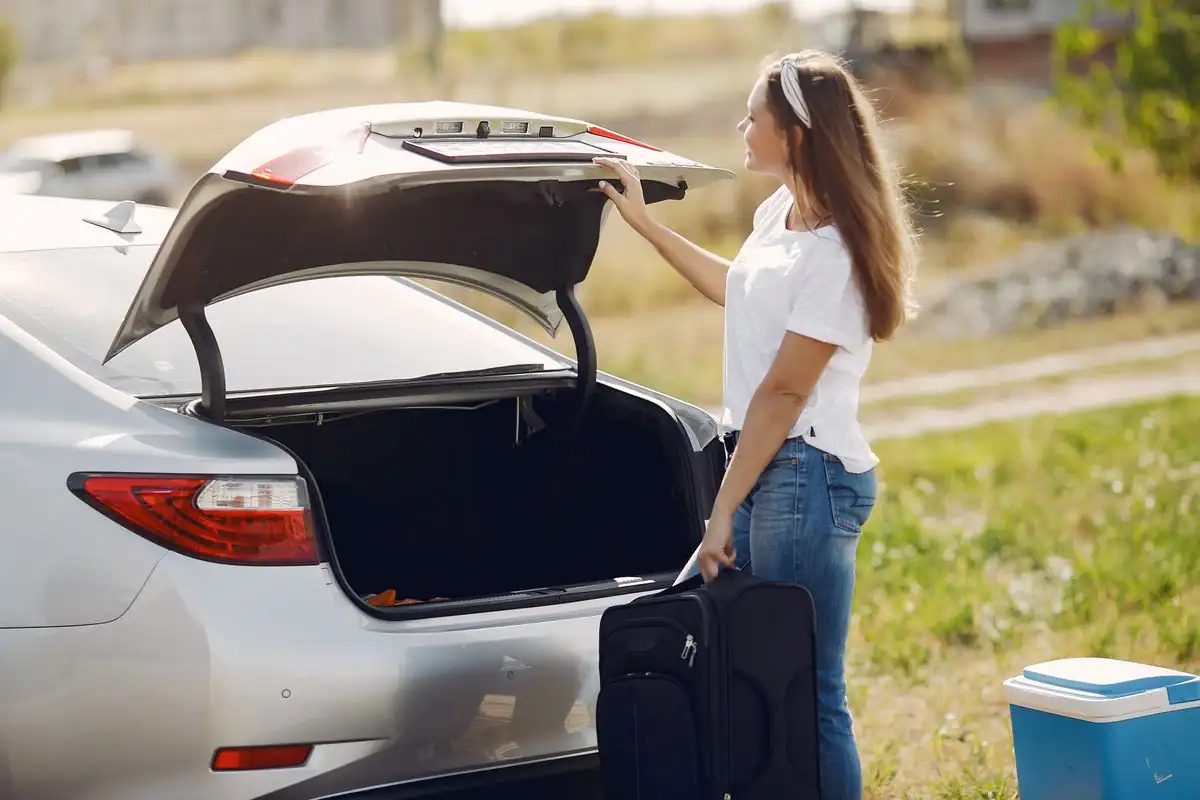
A lot of travel day strains happen in one quick moment, usually loading or unloading the car.
- Pack two medium bags instead of one huge one. They’re easier to lift and balance.
- Pick bags with good wheels and a handle long enough that you don’t hunch over to pull them.
- Bend your knees and hips, not your waist. Keep your chest up and the bag close.
- Face the trunk squarely before you lift. Turn your feet instead of twisting your back.
- Ask for help with anything heavy. Holiday gifts and coolers add up fast.
Sleeping away from home
A rough night can undo all your careful driving. Pack your own pillow if you have room, since pillow height has a big effect on your neck. On a soft guest bed, a pillow between your knees (on your side) or under your knees (on your back) can take pressure off your lower back. Our guide to the best sleeping position for neck and back pain explains the details.
Already dealing with holiday travel back pain?
Even with good habits, sometimes you get home sore. For a typical muscle ache:
Keep moving gently. Short walks usually help more than lying on the couch all day.
Try ice or heat. Ice can calm a fresh strain in the first day or two. After that, heat often feels better on tight muscles. Use whichever feels better, for about 15 to 20 minutes at a time.
Watch for red flags. Get medical care right away if back pain comes with numbness in the groin or legs, leg weakness, loss of bladder or bowel control, fever, or a fall. Sudden leg swelling, warmth, or pain after a long trip, or shortness of breath, also needs prompt medical attention.
If your back or neck is still stiff after a few days, or this happens every time you travel, it’s worth getting checked. At your first visit, Dr. Chad Shaw or Dr. Andrea Shaw will look at what’s actually tight or irritated and talk with you about options like chiropractic adjustments and massage therapy. If the pain is mostly low in your back, our guide to lower back pain is a good next read.
Travel well this season
Holiday travel back pain is common, but it doesn’t have to come with the trip. Set up your seat, stop often, lift smart, and protect your sleep. If you’d like help before or after a big trip, call our Perimeter Park office at (904) 997-1349 or book a visit. We’d love to help you enjoy the holidays feeling good.
